






July 23, 2026
In Sindh’s Thar Desert, water has always been scarce. For the religious minority communities living here, it has always meant miles walked, clay pots balanced on the heads of women and young girls, a burning sky overhead. Then the monsoons began to change. Every year, the rains arrive harder and stay longer. Every year, the records break. The desert flooded. The same communities that had never had enough water were suddenly drowning in it.
The floods did not just destroy homes and harvests. They destroyed a culture: hand-embroidered Sindhi Rallis passed down through generations, painted mud courtyards, the looms, the hearths, the bridges children crossed to reach school. What took centuries to build took one monsoon to erase. And next year, the water will come again.
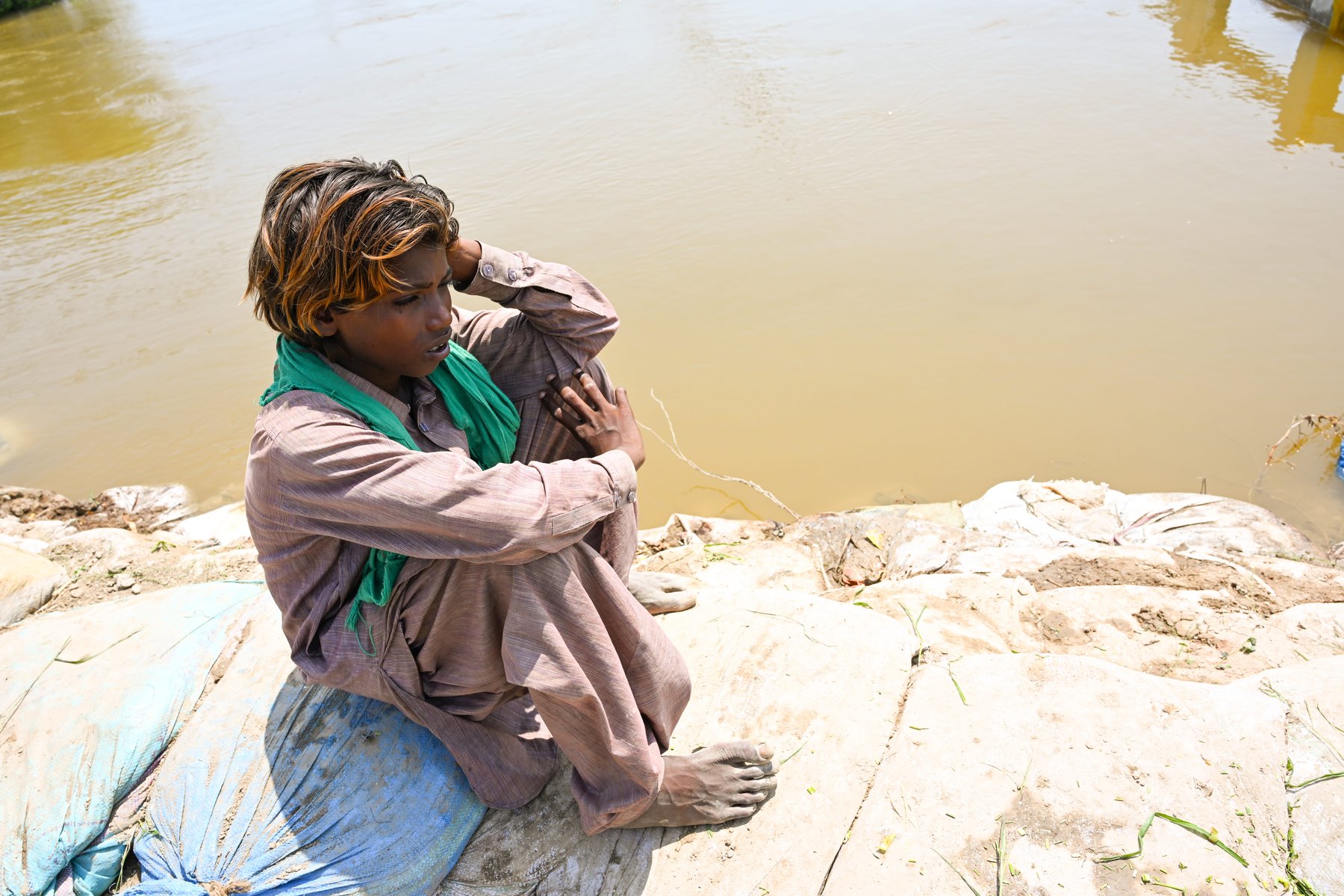
This series moves between the life that existed and the water that erased it, not as a before and after, but as a surreal confrontation between two worlds that should never have met. An elder who has lived through decades of desert heat sits on the last of his possessions, staring at water where his home used to be. A boy who has barely begun his life sits on a flood defence sandbag, looking out at the same horizon, his hand resting on his head. Different generations. The same loss. The same question no one is answering.
Water does not know whose fault it is. It does not read emissions reports or attend climate summits. It simply rises. Pakistan contributes less than one percent of global carbon emissions. Yet every year, climate records are broken. Every year, the extremes grow more extreme. It is paying the price for everyone else, in water, and in everything water takes when there is too much of it.
Images (13 photographs)
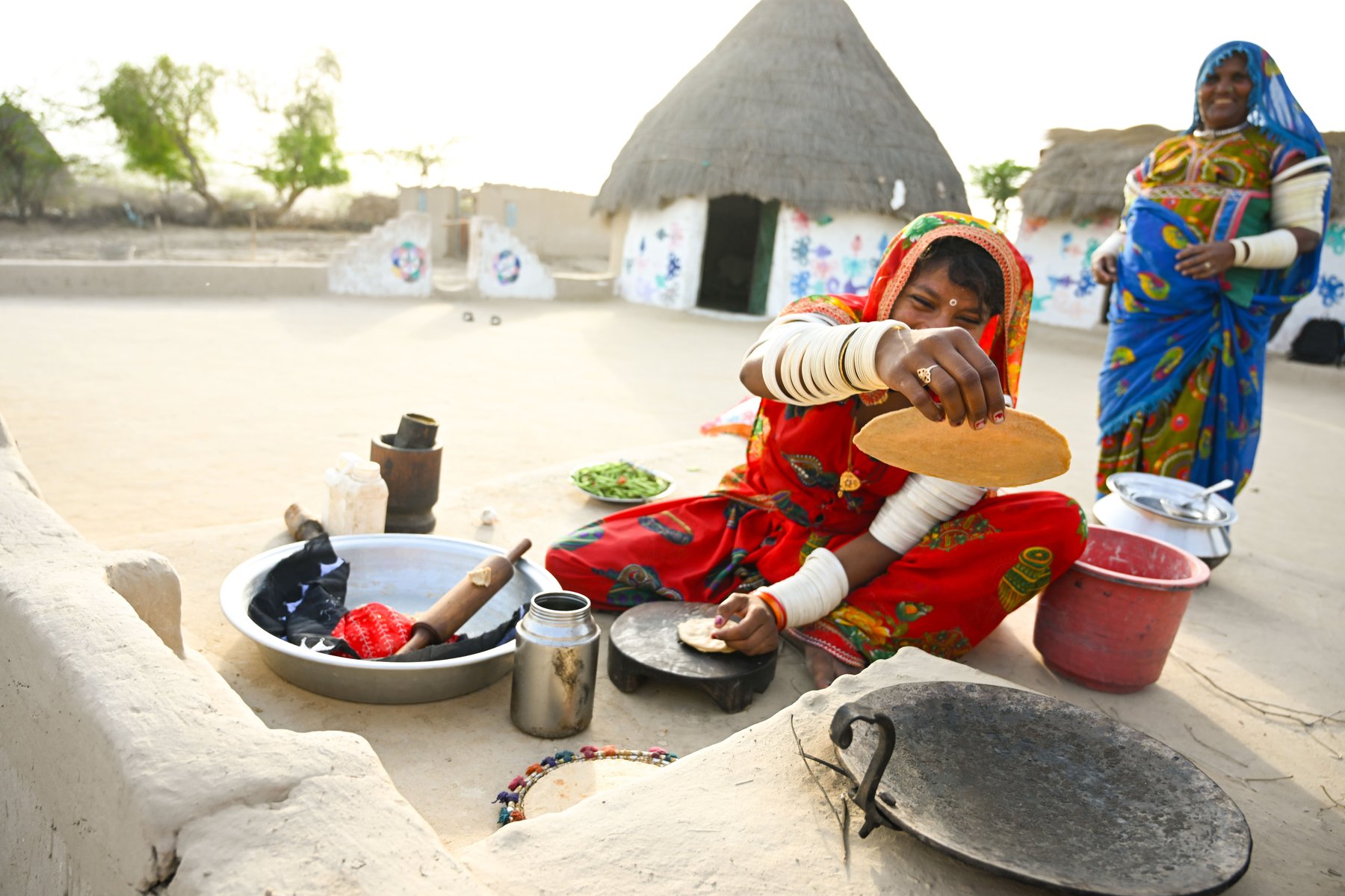
Sodhi, pregnant with her first child, makes roti in the courtyard of her painted mud home. Behind her, her mother-in-law watches. Three generations present in a single frame. This is what existed before the floods came.
Jami recently got married. Around her is her trousseau, Sindhi Rallis, vibrant handmade quilts, embroidered clothes and beddings passed down through generations. What took generations to make will take one monsoon to destroy.
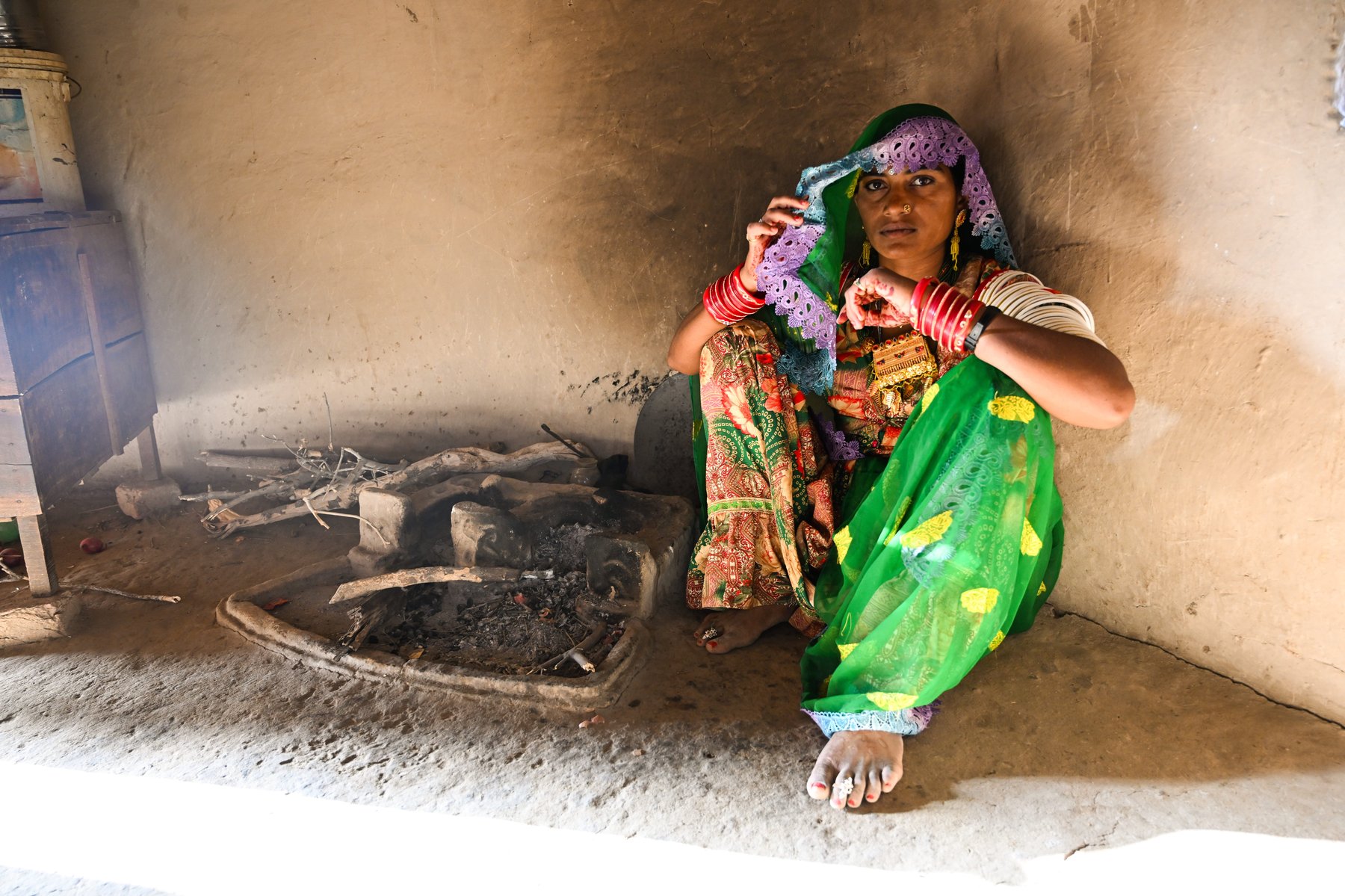
The same hearth. No fire. After the floods, the only thing that matters is keeping it lit, dry wood, clean food, one warm meal. Everything else can wait.
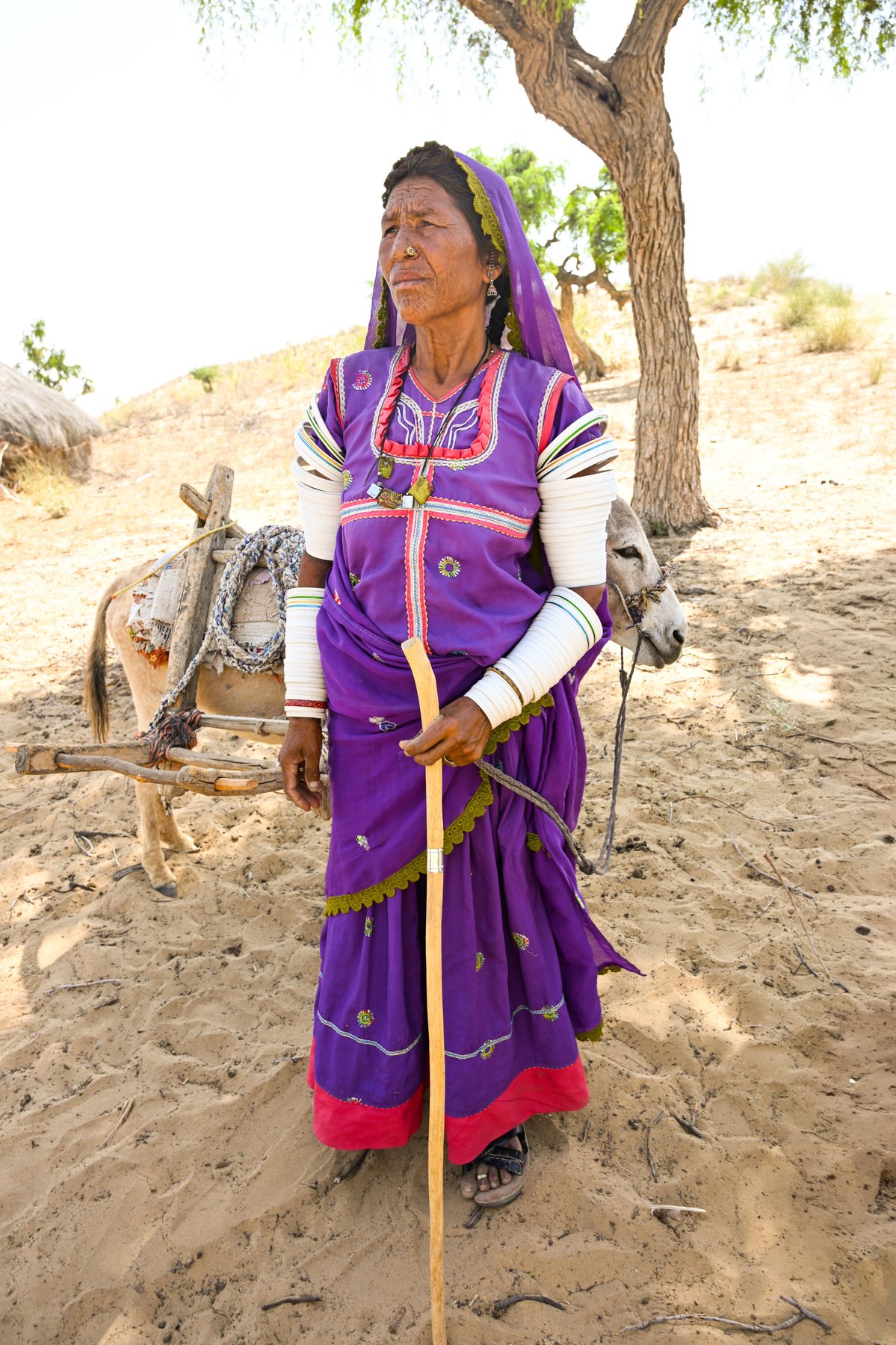
Radha, a grandmother, rests under the shade of a tree with her donkey Ramo before heading out to collect wood for cooking. This is the daily labour that keeps a household alive in the Thar Desert.
Sakshi has walked miles in the desert heat to collect clean water, carrying it home in clay pots balanced on her head. Sweat beads on her face. She is smiling. She found it.
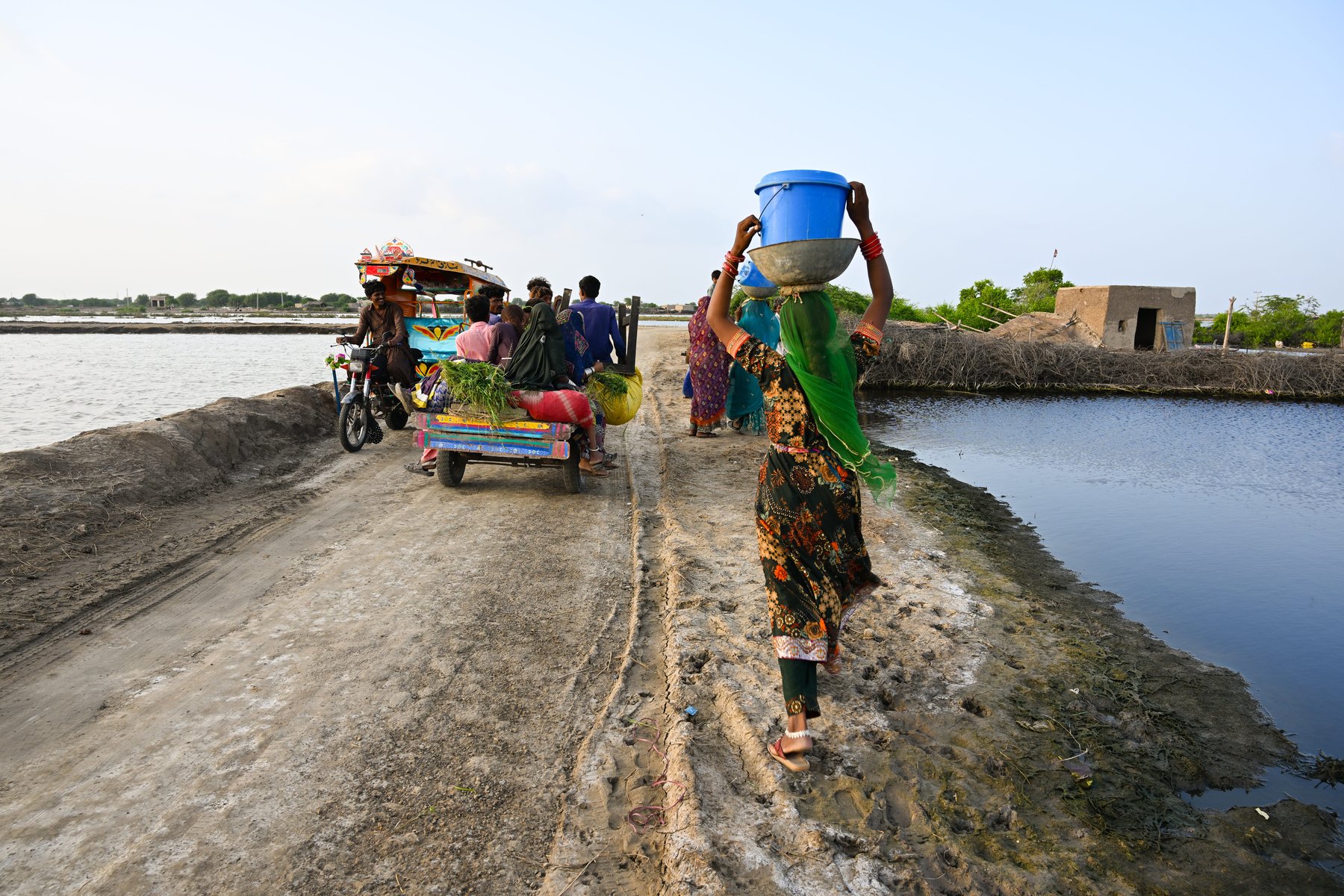
Families move along the only strip of dry land remaining between two bodies of floodwater. A woman balances a blue water container on her head. The submerged village is visible behind them. Life is still moving. It has nowhere to move to.
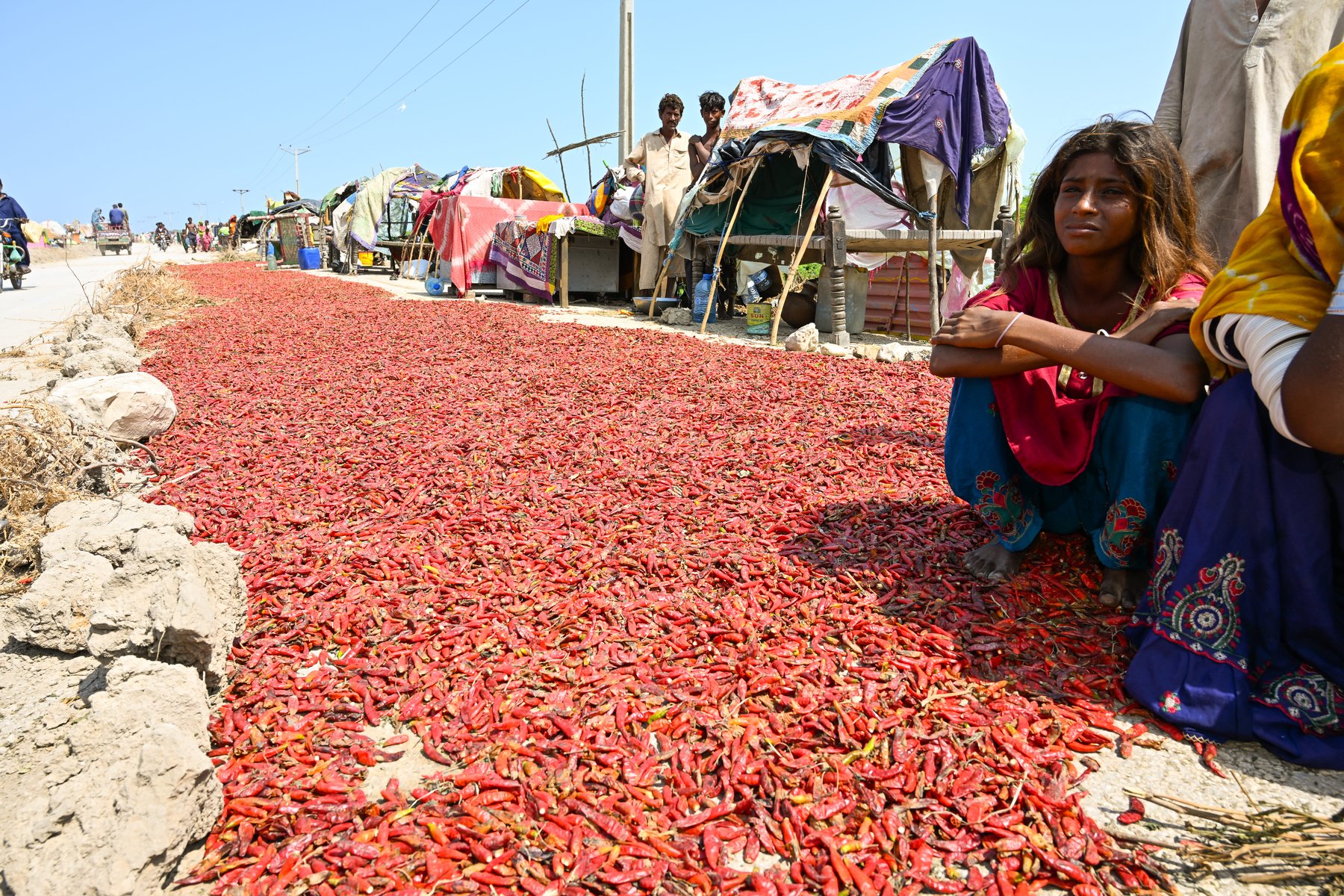
Veerji, from Mir Deen Talpur village, sits beside red chillies spread across the roadside to dry, the salvaged remnant of a destroyed harvest. Behind her, families live in makeshift shelters. This is what was left.
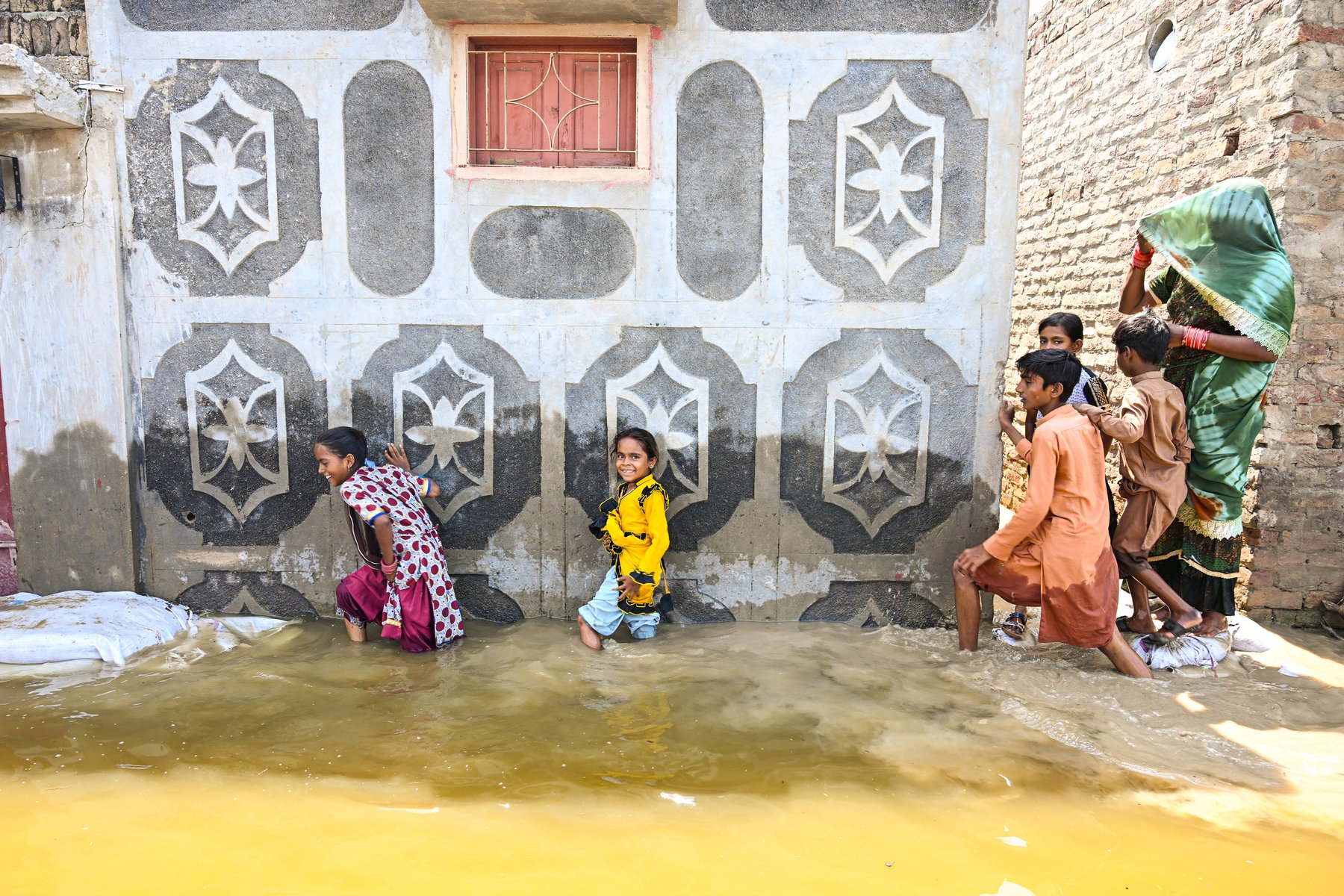
Children wade through floodwater against the ornate geometric facade of a home in Sindh. The hand-painted patterns are now half-submerged. A girl in yellow at the centre is laughing. That makes it harder to look at, not easier.
Pratap sits on flood defence sandbags at the water’s edge, looking out at the flood that swallowed his village. The bridge he crossed every day to reach school is gone. The school is gone too.
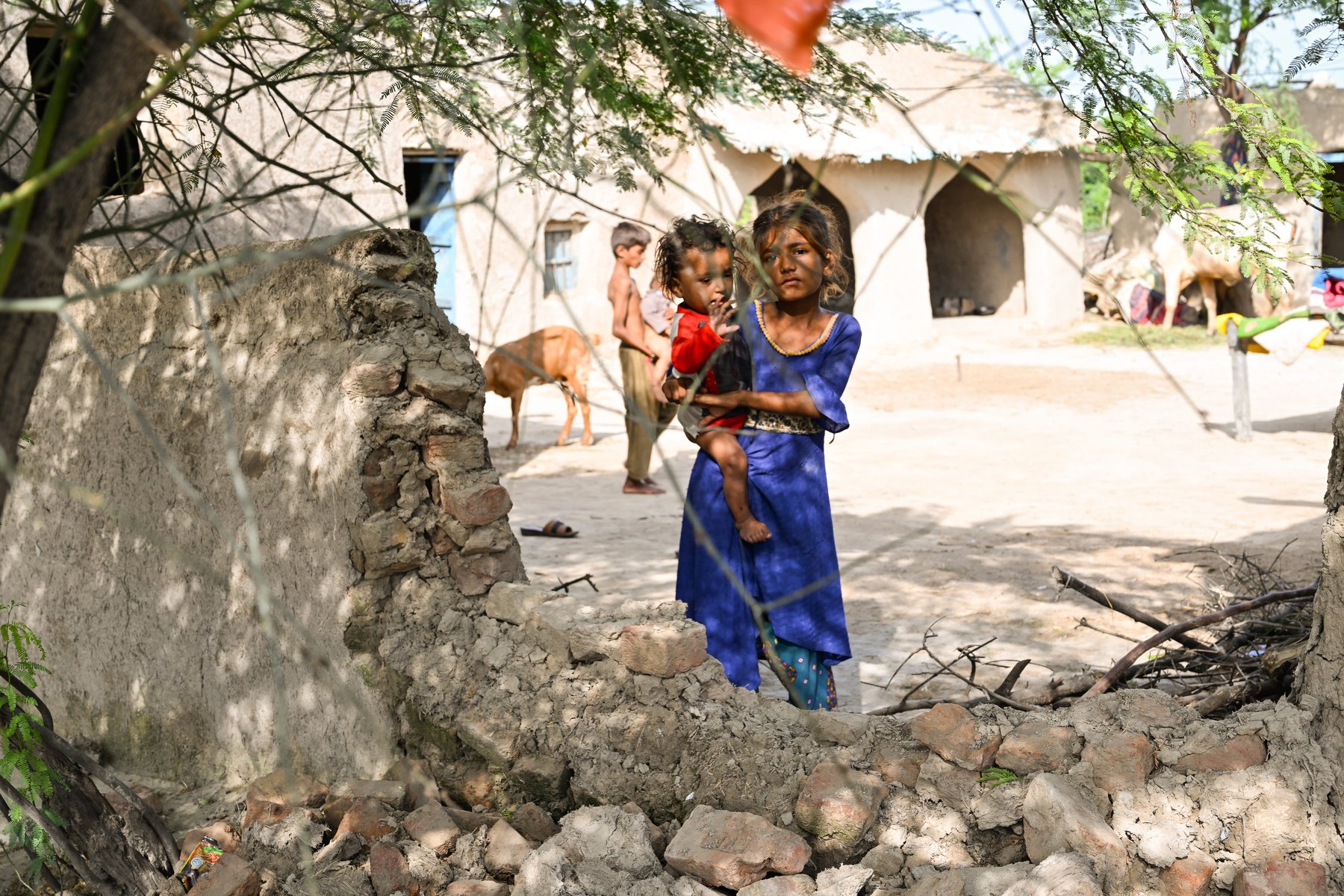
Three children in the courtyard of their flood-damaged home. The girl in blue holds an infant. Behind her, a boy carries another small child. Nobody taught them this. The floods did.
Laalu sits on a charpai with the yellow quilt he carried out of his home, one of the last things he saved. Behind him, where his village used to be, there is only water. His cotton crop is gone.
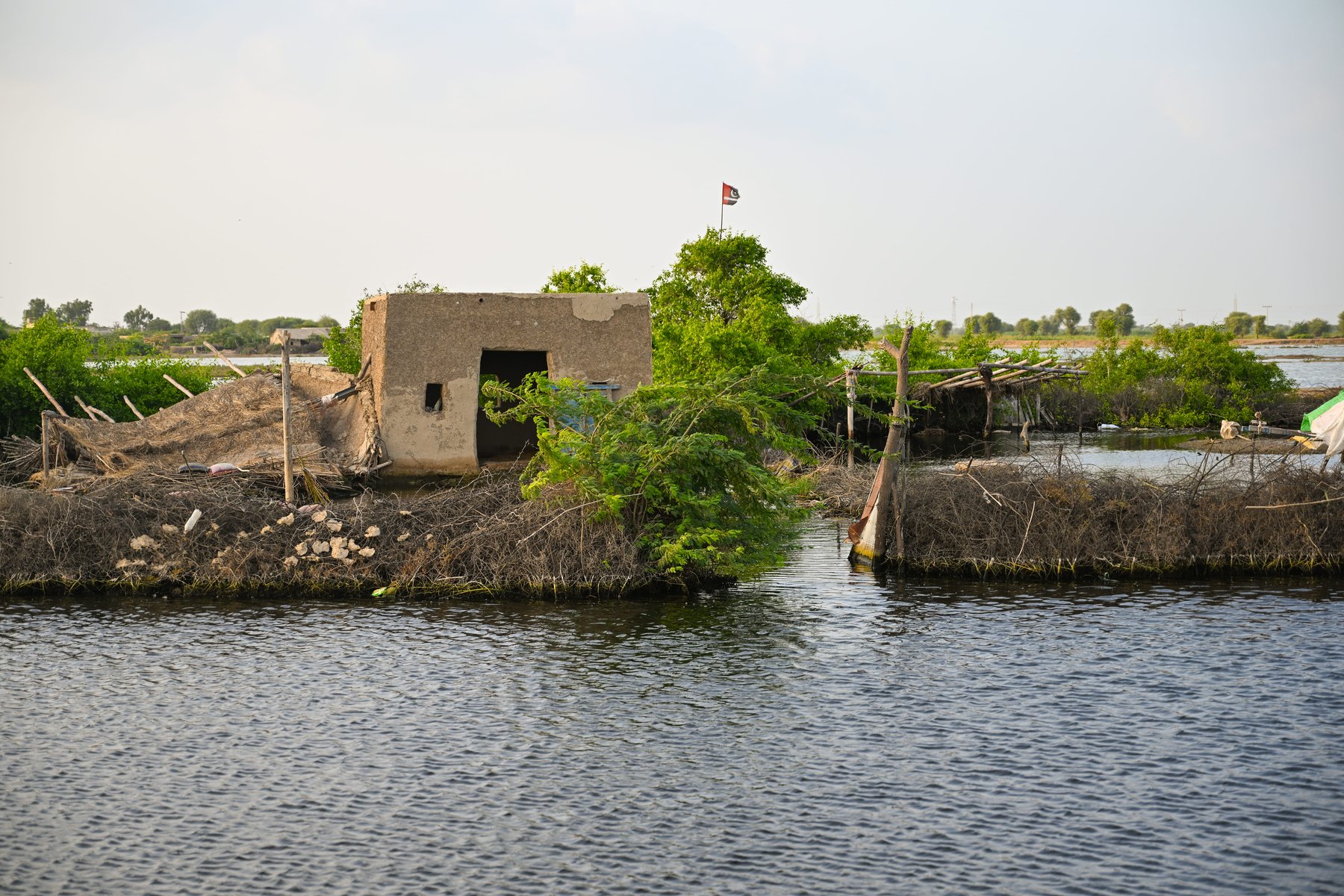
A political party flag rises above what remains of a village in Sindh. Political systems have failed these communities for generations. Corruption, broken promises, and no plan to protect the last mile when catastrophe strikes. The flag stays up. The village does not.
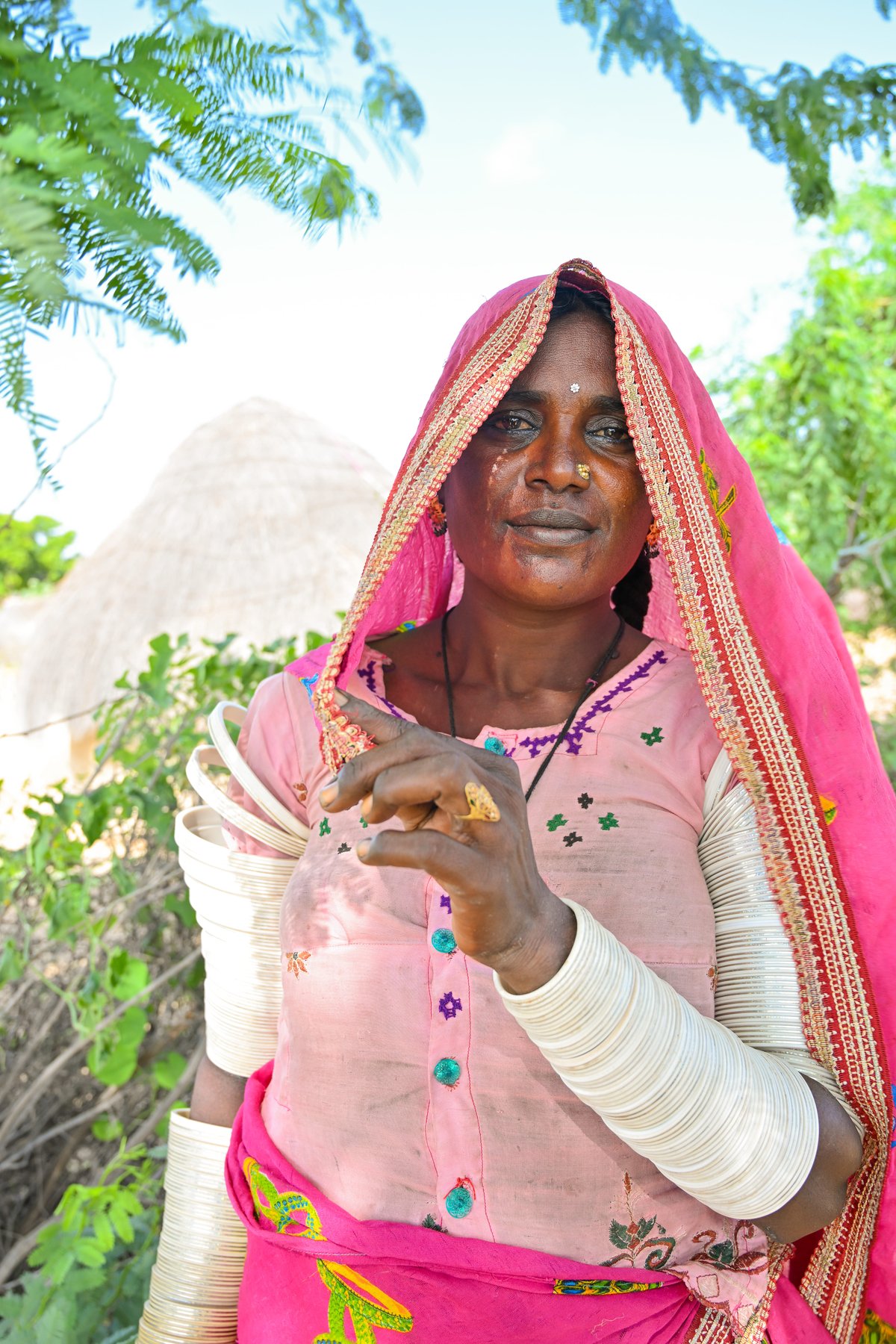
In the middle of catastrophe, Madhavi is still adorned. White bangles stacked to her elbows, pink dupatta, bindi, embroidered cloth. In Sindh, it is women like Madhavi who hold families together after disaster. She is not surviving despite her beauty. She is surviving with it.
By Sahar Zafar
sahar.zafar@atlascorps.org
www.saharzafar.com

No Comments